
Oura Health, best known as the makers of the Oura Ring, has been busy in Washington. The Oura Ring 4 was our health and fitness device of 2025 and worked its way onto our list of the best smart rings, so it was an unequivocal, barnstorming success as far as wearables go. However, the company has set its sights on another prize: a change in US policy to give the company more freedom to develop its wearables, and to make them more ubiquitous in health settings.
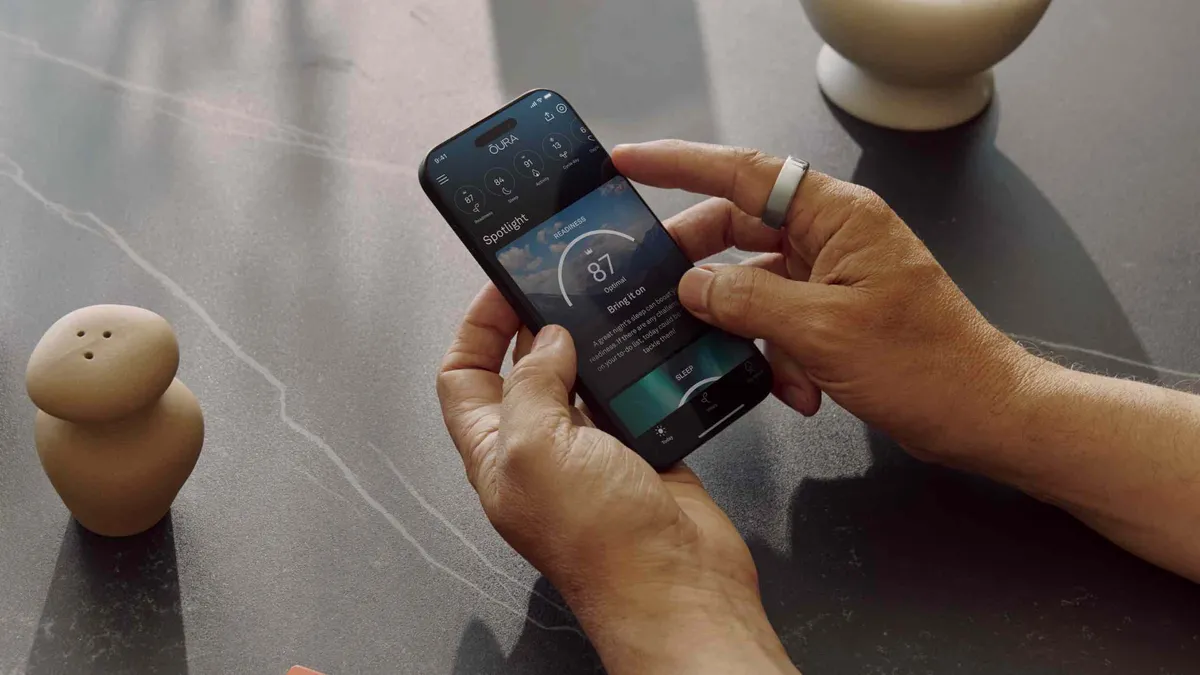
Oura’s already apparently very popular in Washington, with smart rings seen on the fingers of politicians like Alexandra Ocasio-Cortez (above). However, Oura’s got its sights set on the party in power, too; according to a recent Politico article, Oura has been hiring lobbyists to advocate on its behalf at firms linked to the Trump administration and the Republican party, reportedly “boosting its lobbying spend from $40,000 in 2024 to more than $1 million a year”.
Oura's strategy pays off
However, it might not matter for much longer, as Oura’s strategy (throw money at the problem – which, considering it’s a Finnish startup, is a very American solution) is clearly working.
In a blog post published on Oura’s website on February 10, the company said: “Oura’s vision moved one step closer to reality on January 6, 2026, when the U.S. Food & Drug Administration (FDA) issued a revised version of the General Wellness Policy for Low Risk Devices, which was last updated in 2019. This update clarifies and expands the FDA’s view of what types of software-based and sensor-enabled products constitute low-risk general wellness tools”. The FDA is relaxing some of the restrictions on ‘low risk’ wearables, as long as they’re not being used as diagnostic medical tools.
Oura’s algorithms are detailed, and its metrics are accurate. It can help flag up issues such as abnormally high and low heart rates, low blood oxygen during sleep, and other physiological outliers. It can often tell when you’re getting sick before you do, which is why it could make such a useful partner to healthcare providers. Relaxed FDA restrictions will allow it to develop new wellness tools to add to its arsenal.
Oura’s lobbying might also come into play beyond FDA restrictions, in helping to secure its ongoing government contracts. Oura’s largest customer is the Department of War (formerly the Department of Defense), and it supplies rings to civil servants and soldiers alike, and has a software-as-a-service contract with Palantir to monitor military personnel.
@ouraring Let us be clear and start with what matters most: Oura does not sell your data, and we never share it with third parties without your explicit consent. We know some of you are upset and misinformation is spreading. We want to be clear about what this means for you — and what it doesn’t. The DoD environment is completely separate from the Oura platform our members use. To meet strict government security requirements, some DoD programs require that our enterprise solution runs on an Impact Level 5-certified, or IL-5, secure environment. Palantir’s FedStart provides that infrastructure today, but they—and the government—do not have access to your Oura health data.Y our personal data never touches any government system, and nobody from Palantir or the government has access to your data. Full stop. For more resources and information, visit the Pulse Blog linked in bio.
♬ original sound - ouraring
This got Oura into hot water last year, as users didn’t like the idea that the data collected by their smart rings could be tapped into by the notorious data spook firm. Hale posted a video on TikTok to confirm to Oura users that “no one at Palantir can see your data”.
Privacy concerns

Wearables remain a key part of American health strategy. United States Secretary of Health and Human Services Robert F Kennedy Jr stated he wanted “every American to wear a wearable” by 2030. This sparked concern from some quarters about the privacy of users’ sensitive health information.
In the US, the information shared between a patient and their doctor, health insurer, or other medical settings tends to fall into a category known as ‘protected health information’ (PHI), under the US's Health Insurance Portability and Accountability Act (HIPAA). There are strict legal protections in place as to who accesses this data and how it’s stored.
Health information collected by wearables ensures no such legal protection, so sensitive information covering fertility, activity, or sleep can be shared with third parties. Most reputable wearables and health apps assure their customers that they adhere to high security standards, but there have been instances in the past in which period tracking apps like Flo have shared information with services like Facebook. Cambridge University reports that "in the US, data about menstrual cycles has been collected by officials in an attempt to undermine abortion access", while many wearables like the best Fitbits and best Garmin watches list on their privacy policies that they will comply with law enforcement requests to obtain data.
Senator Bill Cassidy introduced the Health Information Privacy Reform Act in 2025, which would create a framework to ensure that wearables companies treat information more like PHI is treated under HIPAA. This would afford all wearables users maximum data privacy and protection, but so far, the legislation has not progressed.
I can envision how and why wearables companies like Oura might try to lobby against this kind of legislation: not only would it require costly new systems and infrastructure, but it would further prevent or limit the sharing of data.
What Oura told TechRadar
I reached out to Oura’s senior management to ask two questions. I first asked whether Oura would support health information to be treated like PHI under HIPAA, and I was informed that Oura couldn’t answer.
I also asked what Oura’s vision was regarding shaping health policy. Oura’s chief medical officer, Dr. Ricky Bloomfield, said that Oura’s “long‑term vision is to help shift health systems from reactive ‘sick care’ towards more preventive, proactive ‘health care’ and that naturally includes how health policy evolves.
“We’re working to deepen this role. First, we’re expanding work with health systems, payers, and public‑health agencies so that clinically meaningful insights from wearables are accessible to broader and more diverse groups, not just early adopters.
“Second, by contributing real‑world evidence to government‑led health discussions so policymakers can see how wearables function as early‑warning and monitoring tools without replacing clinical judgment.”
Put simply, Bloomfield and Oura want smart rings and other wearables to be worn by as many people as possible, potentially handed out by public health bodies, and they’ve been advocating to governments the benefits of using wearables as early-warning systems.
Wearables have already saved so many lives, and Bloomfield’s probably right in that widespread adoption will save more: he also told me this would mean “innovation can move faster, people gain better tools to manage their health proactively, and health systems can reduce overall costs."
I don’t think anyone who’s used wearables can argue with their potential for proactive health management. However, while fast innovation will always be king for tech companies, there’s a danger in planning a widespread, government-linked adoption of wearable tech without increased privacy protections. It’s sometimes worth slowing down to ensure that we get things right.
Follow TechRadar on Google News and add us as a preferred source to get our expert news, reviews, and opinion in your feeds. Make sure to click the Follow button!
And of course you can also follow TechRadar on TikTok for news, reviews, unboxings in video form, and get regular updates from us on WhatsApp too.

➡️ Read our full guide to the best smart rings
1. Best overall:
Samsung Galaxy Ring
2. Best premium:
Oura Ring 4
3. Best budget:
Amazfit Helio Ring

You must confirm your public display name before commenting
Please logout and then login again, you will then be prompted to enter your display name.