Heading into CES 2026, Lego teased that it would be hosting a keynote – but now that the dust has settled, it’s clear the company used the stage to unveil its biggest change to the Lego brick since its modern design debuted in 1958.
The new Smart Play system, and most notably the Smart Brick, is designed to work seamlessly within Lego’s existing play system. That’s intentional. Rather than introducing a new screen or a closed ecosystem, Smart Play keeps the focus on hands-on building and tangible play – the core of what Lego has always been.
It’s also a change that’s been a long time coming.
“Well, you know, the truth of it is, you know, we started this project eight years ago,” explained Julia Goldin, Lego’s Chief Product & Marketing Officer. “So why now is because we are ready. We are ready to go. That’s why now. It’s not because we’re trying to solve some kind of a problem. It’s more because we’re ready with really great innovation.”

That long runway was essential, Goldin said, not just to miniaturize the technology – including a custom chip small enough to fit inside a Lego brick – but to ensure Smart Play could exist as a true platform. Not an entirely new one, though.
“Everything we have done still is part of the system,” Goldin said, noting that Smart Play integrates cohesively with Lego’s existing system of play and is additive by nature. “This just adds a new dimension.”
It’s a different beast from the likes of Lego’s Super Mario sets, which worked with Lego bricks but which relied on a custom Mario figure with a screen and scanner and which largely existed in their own ecosystem.
“We actually learned a lot from the Mario launch,” Goldin said. “We wanted no screens, we wanted no power buttons, we wanted something very seamless… something that anyone could take and fit with any other set and that could actually travel across our whole system as it exists today, but also into the future.”
It’s clear that teams across Lego worked to preserve the tenets of the existing Lego system while elevating interactivity and responsiveness. Given the amount of technology packed into the Smart Brick, I had to ask how Lego views itself today: is it a toy company that also builds technology, or something else entirely?
“I don’t think we can call ourselves a toy anymore because we’re an iconic experience company,” Goldin said, reflecting a broader shift in how Lego now sees itself.
That perspective helps explain why Smart Play avoids many of the pitfalls often associated with connected toys. There’s no screen built into the brick, no app required, and no new, entirely segmented ecosystem to buy into. Instead, intelligence resides within the brick itself, designed to enhance physical play rather than compete with it.
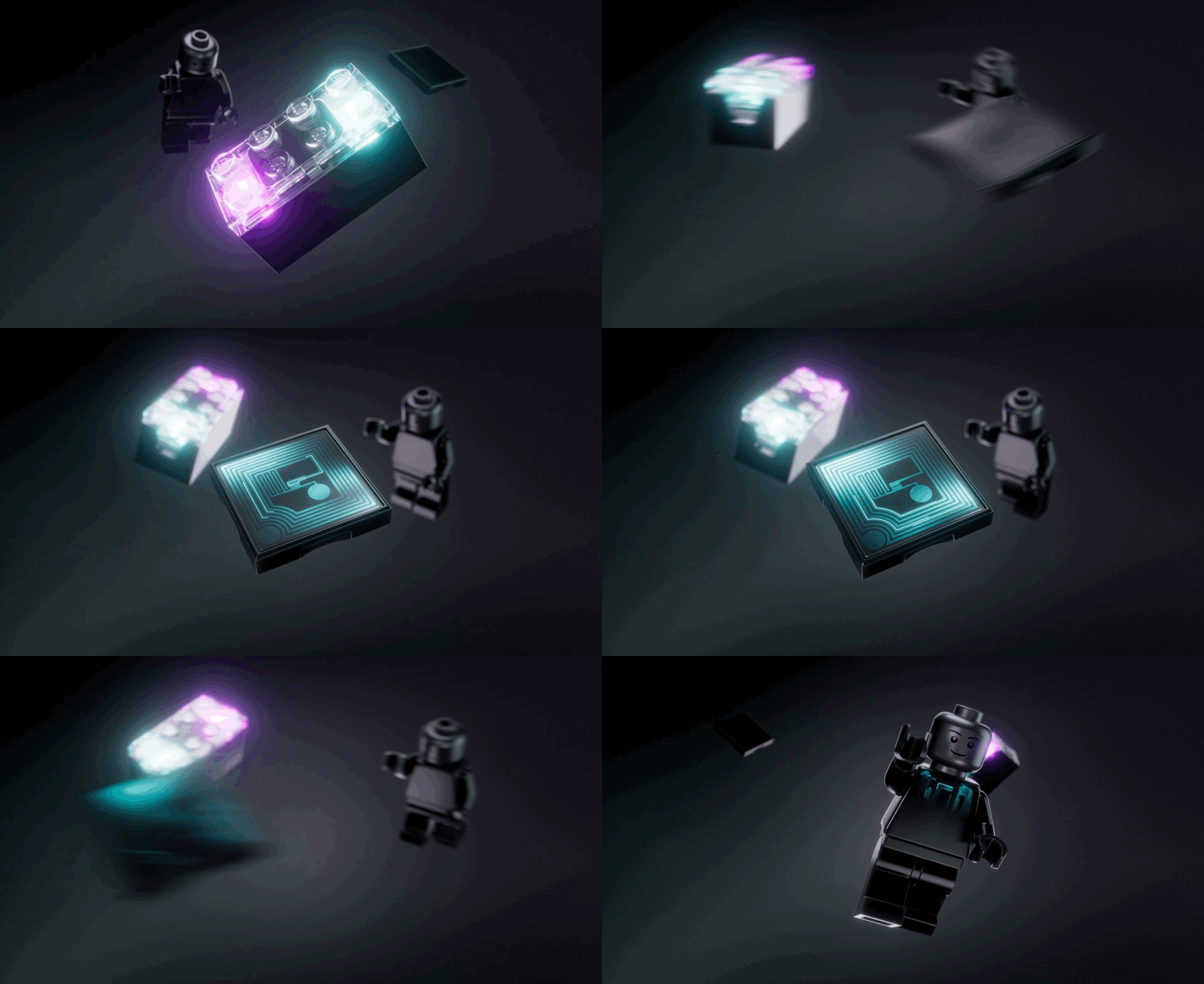
As I saw during my hands-on demo, it’s a classic Lego set at first – say Luke Skywalker’s X-Wing or Darth Vader’s TIE Fighter – but once the Smart Brick is placed inside after being shaken to wake, characters like Luke or Vader can trigger different sounds as they approach the ship, click into place, or even pull off some fun flight maneuvers.
There’s a very low learning curve for the Smart Brick, Smart Minifigures, and Smart Tags.

For Tom Donaldson, Head of Lego’s Creative Play Lab, that philosophy was equally important.
“If you have a screen, they tend to suck you in,” Donaldson said. “And we were very deliberate about saying, no, we love the Lego brick, we love building with Lego bricks, and if we want to magnify that, then certain choices… probably have been advantageous to us.”
That same thinking extends to where Smart Play could go next. While today’s Smart Bricks focus on responsiveness through light, sound, and interaction, Goldin sees the platform as something far more expansive over time.
“I think we’re just scratching the surface,” she said.
While neither Goldin nor Donaldson would comment on what sets might arrive next or how the roadmap could unfold, it’s clear Lego is focused on building a strong foundation for Smart Play – starting with one of the most iconic themes in its lineup, Star Wars – while showcasing just how much technology is quietly working under the hood.
“There are some of the technologies in here that we couldn't have done at all without an ASIC. In particular, the sensing technology,” Donaldson said.
That custom silicon enables the Smart Brick to quietly understand what’s happening around it – detecting nearby Smart Minifigures and Smart Tags, recognizing their relative positions in space, including height and distance, and triggering the appropriate response. Whether it’s a flash of light, a sound effect, or a character's reaction, the experience feels immediate and intuitive on the surface.
Under the hood, however, there’s a level of integration that Lego says simply wouldn’t have been possible without going custom. “The overall capabilities we could not have put together in any meaningful way – size, cost, or even integrated performance – without going to silicon,” Donaldson said.
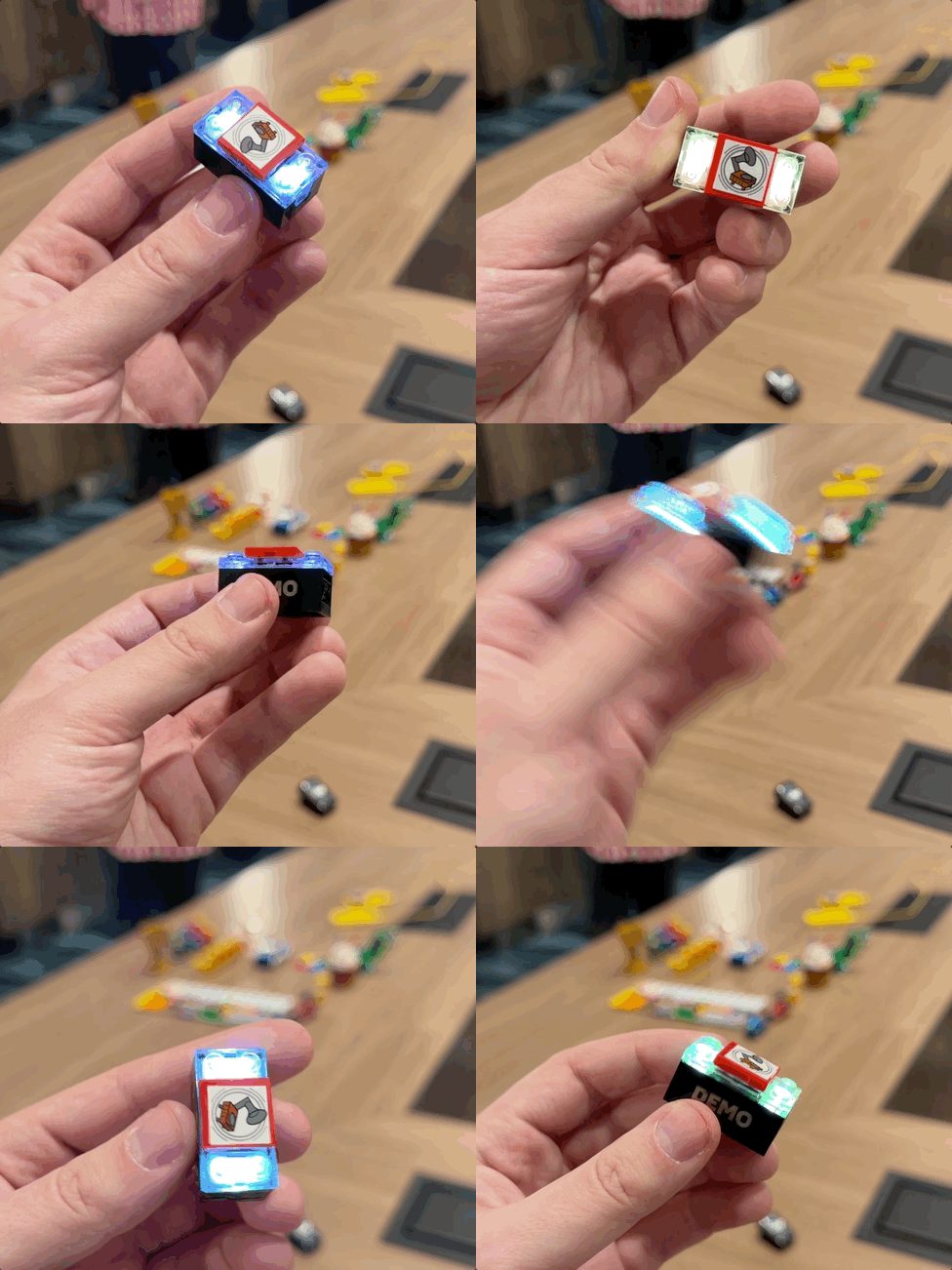
That approach – hiding complexity inside a familiar brick – is central to how Lego thinks about Smart Play. Rather than asking builders to learn something new, the company is betting on technology that merely stacks on the classic Lego experience.
For now, Lego is focused on laying a strong foundation. Smart Bricks that fit into the existing system. Smart Minifigures and Smart Tags that add a layer of fun without replacing traditional play. And a platform designed to evolve while remaining grounded in the simplicity, creativity, and reusability that have defined the Lego brick for decades.
Lego’s kicked off preorders for the first three Star Wars Smart Play sets, and the line starts at $69.99 / £59.99 / AU$99.99 for Vader’s Tie Fighter that includes a Smart Brick and Charger, a Smart Minifigure, and a Smart Tag – in total, it’s 473 pieces.
You can also get Luke’s X-Wing for $99.99 / £79.99 / AU$149.99 and the Throne Room Duel & A-Wing for $159.99 / £139.99 / AU$249.99. You can read our first look at the Smart Play Star Wars sets here.
TechRadar will be extensively covering this year's CES, and will bring you all of the big announcements as they happen. Head over to our CES 2026 news page for the latest stories and our hands-on verdicts on everything from wireless TVs and foldable displays to new phones, laptops, smart home gadgets, and the latest in AI.
And don’t forget to follow us on TikTok and WhatsApp for the latest from the CES show floor!

You must confirm your public display name before commenting
Please logout and then login again, you will then be prompted to enter your display name.