
- A YouTuber tested six different versions of Windows for speed
- That included Windows XP, Vista, Windows 7, 8.1, 10 and 11
- While the results are skewed due to the hardware used for testing – and other elements – the results are still worth considering
Windows 11's performance does not come off at all well in a new comparison test that pits six different versions of Microsoft's desktop OS against each other – although it doesn't do so in a very fair way.
Tom's Hardware noticed the suite of tests run by YouTuber TrigrZolt (see the clip below), and the basic premise is quite flawed – and I'll come back to why later (although it's rather illuminating to compare Windows 11 to 10 in some respects, and I'll return to that point, too).
At any rate, first of all, let's look at the tests themselves, which were carried out on Windows XP, Windows Vista, Windows 7, Windows 8.1, Windows 10 and Windows 11 (using the latest, or final, versions in all cases, as you'd expect).
They were run on the same model of laptop, with a bank of six old Lenovo ThinkPad X220 notebooks being used, and this is the major problem with this particular round of testing, as the YouTuber acknowledges (saying this testing is more about 'historic' perspective rather than practicality).
This laptop has an Intel Core i5-2520M CPU and a 256GB hard disk (not an SSD), with 8GB of RAM, and the notebook isn't officially compatible with Windows 11 (but can still be fudged to run the OS, of course).
As noted at the outset, Windows 11 performs pretty badly across most of the tests thrown at these laptops, which are run simultaneously across the different notebooks – you can see some tests, like bootup speed, being performed in real time, while others, like the battery-life test, are sped up.
Speaking of bootup, this is one metric where Windows 11 comes dead last, and even when the desktop does finally appear, the taskbar is notably missing (as it's still loading in). Windows 8.1 is actually the fastest OS to boot.
Windows 11 is also in last place when it comes to the memory that these operating systems consume, due to its larger complement of background processes. The same is true of the battery test, where the Lenovo ThinkPad running Windows 11 died first. (Windows XP was victorious here, although the difference was minor, just a couple of minutes – all the OSes lasted for just over an hour).
In the video-editing test (using OpenShot), Windows 11 came last, too (although the caveat here is that Windows XP and Vista couldn't run this editor). When testing app opening speeds, TrigrZolt found that Windows 11 again came last for firing up Paint (which was notably slower than all other Windows versions), and also File Explorer (that's notoriously sluggish with Windows 11).
Windows 11 did better in some tests, such as storage (the drive space that the operating system consumes, including its default apps), where Microsoft's newest OS ranked fourth (Windows XP wins here, which isn't surprising as it's so lean). Also, in one of the web-page loading tests, Windows 11 came third (but was last in the other one, loading Google's search page).
Windows 11 was nippy in the file transfer test (copying a large ZIP file from a USB stick) as well, finishing second here (it was only a fraction slower than Windows 10 – in fact, it was pretty much a dead heat).
Check out the full range of tests in the video below if you want to see for yourself, before I dive into my analysis.
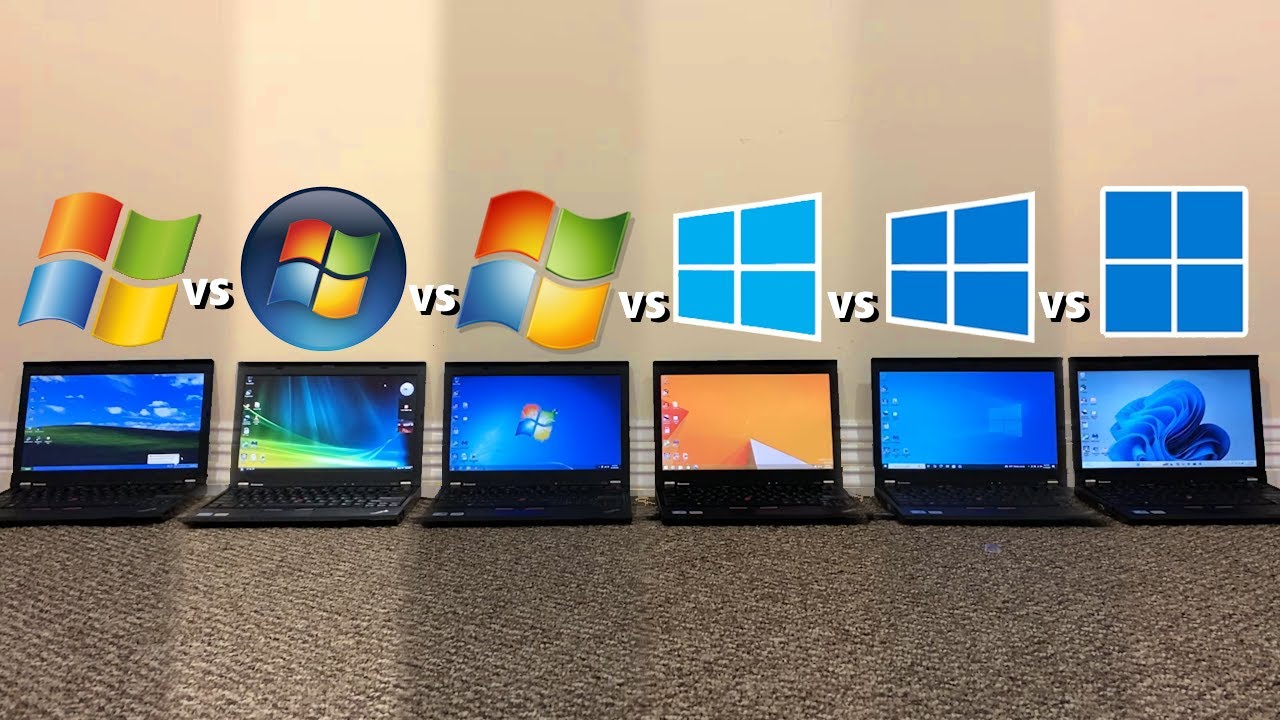
Analysis: bleak, yet unfair – but Microsoft should still take note
A bleak picture is painted of the general performance prowess of Windows 11 across many fronts here, but as I've mentioned there are hefty caveats. The most obvious sticking point here is that it's not fair to use a laptop that doesn't meet the minimum hardware requirements for an OS, which is the case for this Lenovo notebook and Windows 11.
Those requirements are there for a reason, whether or not you believe Microsoft was right in pushing steeper specs for Windows 11. A PC needs to meet this minimum spec to provide a responsive and reasonable enough experience with Windows 11, and if it doesn't, you can't then complain: 'Hey, look how slow all this runs'. Because Microsoft already told you it'll be a subpar experience with those system requirements.
Some of the app benchmark choices also skew things against Windows 11, such as Paint, which is a far heftier app in the modern OS than it used to be (in other words, a particularly beefed-up default app was chosen here). As does the use of a hard drive, which is ancient tech, really, for a primary system drive these days – any contemporary PC has an SSD.
In short, the design of this suite of tests shows off the worst of Windows 11 in many respects, and the best of a much leaner OS from way back in the day like Windows XP. As Tom's Hardware points out, a better test would be to compare these operating systems running on hardware relevant to their era (so Windows 11 is at least installed on a laptop that meets its minimum spec); although arranging and balancing that alternative test wouldn't be easy, of course.
Furthermore, this testing isn't without merit. It does point out relative shortcomings, such as the slow loading of Paint and File Explorer in Windows 11, or other performance hiccups, and how Windows 10 does better in many ways. That said, a lot of those pain points are to do with Microsoft's choices to beef up Windows 11 and its apps, which again, must be taken into consideration – Microsoft's newest OS does a lot more than the older versions in terms of features and functionality.
Also, the comments on this YouTube video should prove valuable guidance for Microsoft, should the company choose to peruse them. Accusations of Windows 11 being bloated, amongst complaints about telemetry data and background monitoring ('spying' is the term used), are repeated themes.
And there's definitely room for improvement with Windows 11's general performance on the desktop – particularly in the case of File Explorer, which has been a longstanding beef with Microsoft, not to mention the company overly focusing on AI in more recent times at the expense of the OS fundamentals.

➡️ Read our full guide to the best computers
1. Best Windows:
Dell Tower Plus
2. Best Mac:
Apple Mac mini M4
3. Best Mac AIO:
Apple iMac 24-inch (M4)
Follow TechRadar on Google News and add us as a preferred source to get our expert news, reviews, and opinion in your feeds. Make sure to click the Follow button!
And of course you can also follow TechRadar on TikTok for news, reviews, unboxings in video form, and get regular updates from us on WhatsApp too.
You must confirm your public display name before commenting
Please logout and then login again, you will then be prompted to enter your display name.